Rhode x e.l.f.: What happens when you try to scale intimacy?
Jun 15, 2025
5 min read
What happens when a brand built on soft power meets a business built for scale? A case study in how to — or how not to — do it.

There are brand deals, and then there are brand moments — inflection points where identity, capital, and culture collide.
In a stunning display of capitalism doing what capitalism does best — buying cool and then trying not to ruin it — e.l.f. Beauty has just acquired Rhode, Hailey Bieber’s dewy-skinned, low-stock, high-gloss skincare brand, for a cool $1 billion.
A billion dollars. For five SKUs and one jawline.
You have to admire the efficiency.
But beyond the headlines and dollar signs lies a deeper question:
What happens when a breakout cult brand is absorbed by a publicly traded machine?
This isn’t a merger. It’s a brand wedding.
On one side: e.l.f. — a growth-hungry cosmetics machine with Wall Street approval and TikTok-level thirst traps.
On the other: Rhode — the Instagrammable altar of minimalist skincare, powered by one very famous face and the kind of intentionality that makes spreadsheets cry.
e.l.f. brings scale. Rhode brings meaning.
Together, they’re hoping to make babies. Beautiful, algorithm-optimised, community-activated babies.
What Each Gets Out of This?
e.l.f. gets:
Cultural capital
A founder with 50 million built-in customers
A shot at prestige without the boring stuff like heritage or French pronunciation
Rhode gets:
Infrastructure
Distribution
Quarterly earnings calls and more spreadsheets than any creative should ever see

Fame is the new infrastructure
Forget warehouses. Forget R&D. In 2025, your real logistics platform is your face.
Hailey Bieber isn’t just a founder. She’s a content engine, a customer acquisition strategy, and a one-woman affiliate network. Fame used to be a bonus. Now it’s a business model.
In Ana Andjelic terms, Rhode is a brand with symbolic capital — a vessel for identity, aspiration, and affiliation. Its valuation wasn’t driven by inventory or distribution. It was driven by meaning. By editorial value. By its ability to sell a mood, a lifestyle, and a self-image.
Make no mistake: this isn’t a skincare acquisition. It’s a brand-operating-system play.
e.l.f. isn’t just buying gloss. It’s buying a mythology. A content cadence. A cultural code. A founder with a camera and a moodboard and the kind of algorithmic compatibility most CMOs would gladly trade their martech stack for.
As Grant McCracken might say, modern brands act as cultural intermediaries. They don’t just sell products — they stage meanings.
And in this case, the meaning is dewy, minimal, feminine control.
And yet, from an Ehrenberg-Bass Institute perspective, this acquisition represents a classic bid to grow mental availability — ensuring the Rhode brand becomes easier to recall, recognise, and reach across more buying occasions.
While its current value is rooted in emotional resonance and founder proximity, e.l.f. will be betting on distinctive assets and increased physical availability to shift Rhode from cult to category player.
Let’s take a closer look at each brand.
Rhode: From ethos to asset
Rhode wasn’t built to scale. It was built to mean. A minimalist brand with a maximalist founder presence, Rhode’s early success came not from product volume but from narrative clarity: skincare as lifestyle, Hailey Bieber as muse and maker, and a tightly controlled brand world that felt more atelier than enterprise.
It had restraint. It had obsession. It had scarcity.
Now it has shareholders.
The risk? That Rhode becomes less brand and more SKU. That what made it desirable — its sense of intimacy, intentionality, and insider chic — gets flattened in the pursuit of mass growth. The brand built on soft skin and softer power may now be asked to scale like a fast-beauty brand: wide, fast, loud.
Just ask the ghosts of Kylie Cosmetics (51% acquired by Coty in 2020), KKW Beauty (20% stake acquired by Coty in 2021), or even Honest Company (founded by Jessica Alba and later taken public).
The playbook is familiar: scale, expand, extract.
But with each layer of institutional growth, the original soul — the irrational connection between founder and fan — often fades.
e.l.f. Beauty: The challenger brand grows up
e.l.f. just bought more than revenue — it bought relevance.
A decade ago, e.l.f. was a budget-friendly, Gen Z–curious brand in the drugstore aisle. Today, it’s a Wall Street sweetheart with a viral marketing engine and a knack for merging value with velocity.
Rhode gives e.l.f. something it hasn’t yet earned on its own: cultural prestige.
It’s the difference between being popular and being cool. Between mass market and meaning market.
We’ve seen this move before: Estée Lauder acquiring Too Faced, LVMH buying Fenty. These conglomerates don’t just buy performance — they buy personality.
But often, once inside the machine, the very thing that made the brand singular begins to bend to quarterly forecasts and scalable processes.
Handled well, e.l.f. becomes more than a beauty company. It becomes a brand ecosystem — one that balances volume and value, data and desire, shareholder and subculture.
Handled poorly, it becomes the corporation that swallowed the brand.
But what if we’ve misunderstood the power dynamic altogether?
What if Rhode isn’t the brand getting saved — but the one doing the saving?
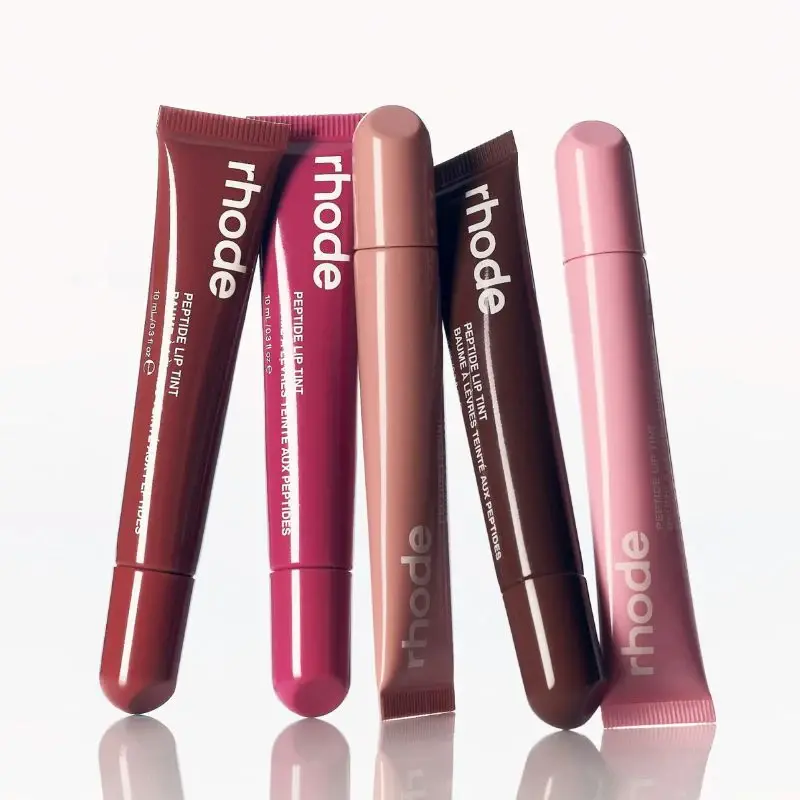
What if e.l.f. needs Rhode more than Rhode needs e.l.f.?
This isn’t just e.l.f. acquiring a growth engine — it’s e.l.f. acquiring cool. Intimacy. Fashion adjacency. Aspirational minimalism. It’s a prestige halo play disguised as a P&L one.
In that sense, e.l.f. isn’t swallowing Rhode — it’s borrowing its symbolic capital. But you can’t acquire edge. You can only earn it.
Rhode is a brand built on cultural finesse. e.l.f. is a brand built on operational velocity. The tension isn’t accidental. It’s existential.
One brand, two operating systems
One seduces with silence. The other succeeds with sound. Now they share a boardroom.

Why your brand might now feel like an airport Starbucks
The Real Risk? Dilution by PowerPoint.
Here’s the uncomfortable truth: every brand wants to scale — until they realise that scale is the fastest way to erode the very thing people loved in the first place.
Once, Rhode may have felt like a handwritten note from Hailey herself. Now? It’s starting to feel like it’s been run past legal. Maybe even procurement.
That creeping shift? It’s what we call the Perceived Distance Effect — the emotional disengagement that sets in when a brand that once felt close starts sounding corporate.
First comes the tone shift. Then the range expansion.
Then the brand extension nobody asked for — Rhode for Men — and suddenly, you’re relaunching the brand that never needed fixing.
It’s the indie brand you once loved, now speaking in bullet points.
Product drops with Q4 earnings targets attached.
You can’t scale intimacy. But they’ll try anyway.
Welcome to the age of ‘Hybrid Brands’
Gone are the days of small vs big, indie vs corporate. We’re entering an era of brand-building that defies old binaries.
The new frontier is hybrid.
Brands that behave like creators. Corporations that act like collectives. Founders who are part myth-maker, part operator. This is not the era of either/or. It’s both/and.
The new species of brand is a chimera.
Aesthetics by creative directors
Logistics by MBAs
Community management by former fans
All underwritten by spreadsheets
Rhode × e.l.f. isn’t just a case study in beauty. It’s a preview of the next business model: belief-driven, founder-authored, data-enabled, culturally attuned, and structurally flexible.
The future brand isn’t boutique or behemoth — it’s a system with soul.
It’s not a business or a brand. It’s business as a brand.